
Episode 425
A rebuilt generator, a Morris with mystery wiring and a Beetle that refuses to start when hot: this week, viewers bring the questions to the RiE-Store workshop. Electrical problems dominate the conversation, with a recurring theme running through Ash's answers: establish what is fitted, understand how it belongs together and work through it methodically.
We begin with a restored 1943 Harley-Davidson WLC and a question about polarising its rebuilt generator. Ash draws on his experience of Harley charging systems, before the discussion widens to the different arrangements found on older vehicles. It sets the scene for the episode's biggest subject: making sense of wiring that has accumulated years of alterations.
One viewer is preparing to rewire a 1935 Morris, having found disconnected wires, unwired relays and a pull knob with no obvious purpose. Ash's starting point is the original wiring diagram. If the aim is to retain the original system, the gauges and charging equipment need to be identified and matched to it. The variety of early charging arrangements makes that groundwork particularly important.
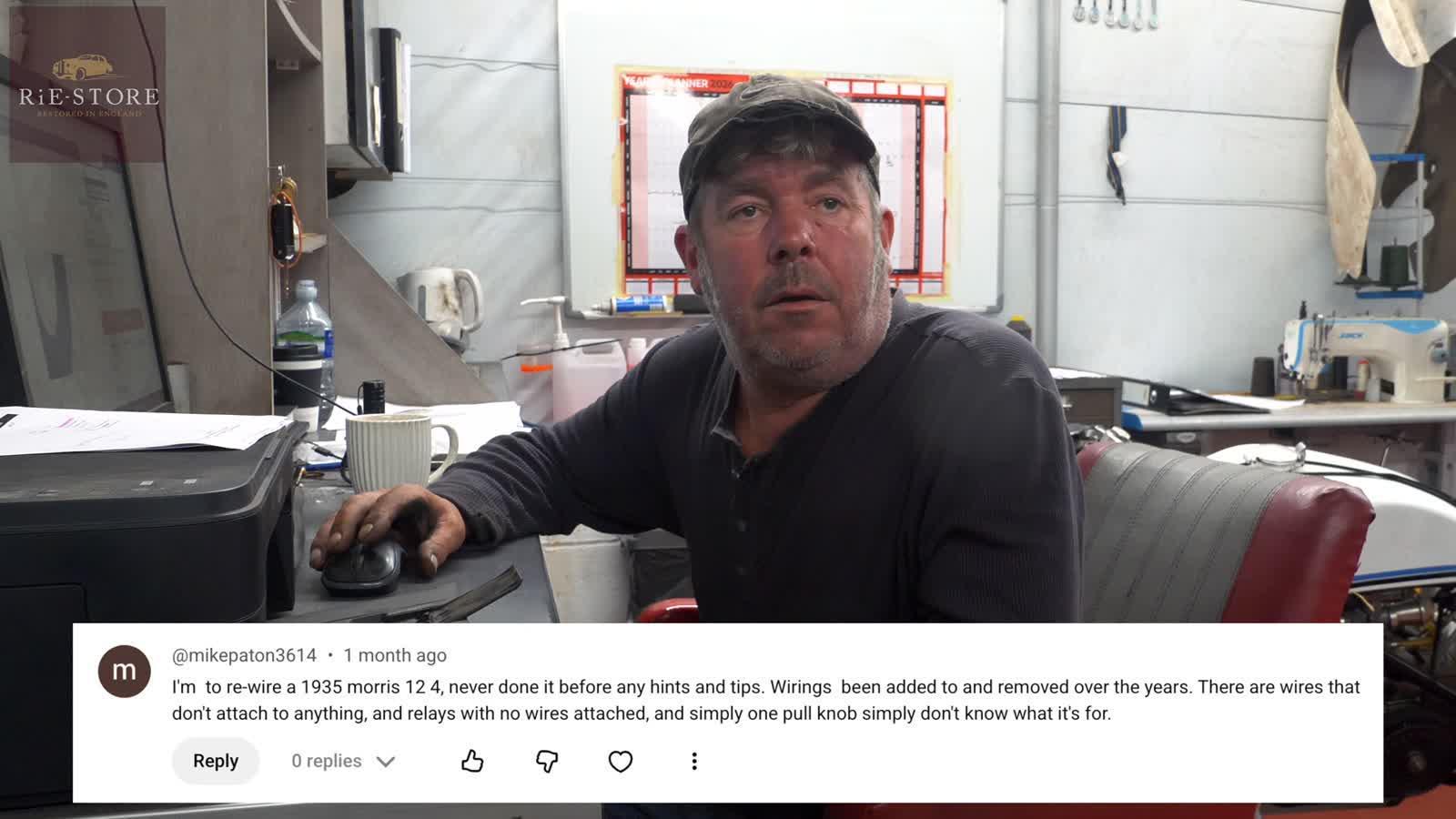
From there, the job becomes more manageable one circuit at a time. Ash refers back to the Vanguard and the familiar problem of additions building up beneath a dashboard. His preference is to start afresh where an altered loom has become impossible to follow, while recognising that sound sections may still be usable. The aim is to understand what every connection is doing.
There is a pause for a Triumph pre-unit Slickshift gearbox question. Asked whether the mechanism can be disabled without destructive alterations, Ash is candid: he has not worked on one and cannot give a definite answer. He discusses the standard Triumph gearboxes he has rebuilt, while leaving the Slickshift question open.
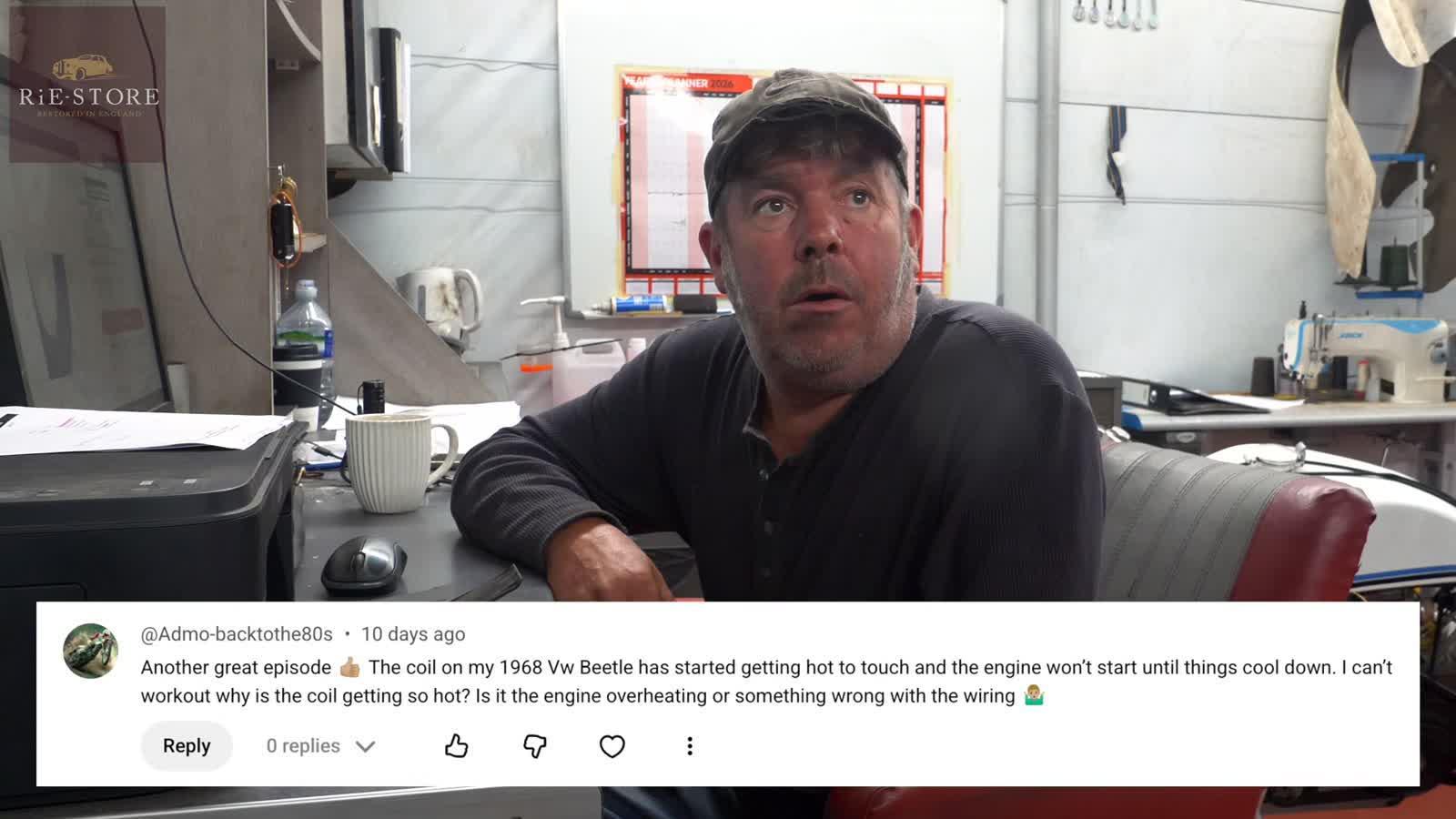
The electrical theme returns with a 1968 Volkswagen Beetle whose coil becomes hot and whose engine will not restart until it cools. Ash discusses a failing coil as a possible explanation and stresses the importance of matching the replacement to the ignition system, including its ballast-resistor arrangement. The symptom prompts a discussion of the components actually fitted to the car.
Another question takes us from fault-finding to making a loom. Ash made the Vanguard's wiring himself and generally takes that approach where a suitable ready-made loom is difficult or expensive to obtain. For the Morris, an owners' club may help locate a supplier. For Harleys, he discusses the availability of ready-made looms and the value of having the correct plugs and fittings included.
One practical detail stands out: leave generous wire lengths during construction. Discovering that a wire is too short when the dashboard goes back in is an avoidable frustration. Extra length gives room to work during final fitting.
Towards the end, attention turns to oil around a wartime Harley's transmission. Ash distinguishes the rear-chain oiler's intended delivery from unwanted leakage, discussing fasteners, gaskets, shaft wear and the sprocket seal as areas to investigate. A final question about rigid-frame Harleys brings the conversation round to ride quality and the limitations of the original design.

We finish with questions explored rather than a completed repair. Across charging systems, looms, ignition faults and oil leaks, the useful starting point remains consistent: identify the system, consult the relevant information and investigate each part in turn. Even a tangled collection of old wires becomes easier to approach one circuit at a time.