
Episode 428
David's motorcycle is finally running, although the carburettor still isn't giving us the running quality we want. Now another problem needs attention: it isn't charging. This week in the RiE-Store workshop, a stubborn warning light leads us inside a generator with a long list of things wrong with it.
Ash starts with a familiar suspect, the relay. Swapping it for another makes no difference. Fitting another generator, however, puts the light straight out. That gives the investigation a clear direction: the original generator needs to come apart.
There is an immediate discovery. As it is dismantled, the third brush falls out, with its end missing. It looks like a promising explanation, so Ash rebuilds the unit with new brushes and checks the field-coil wiring against a diagram. The generator still refuses to work.
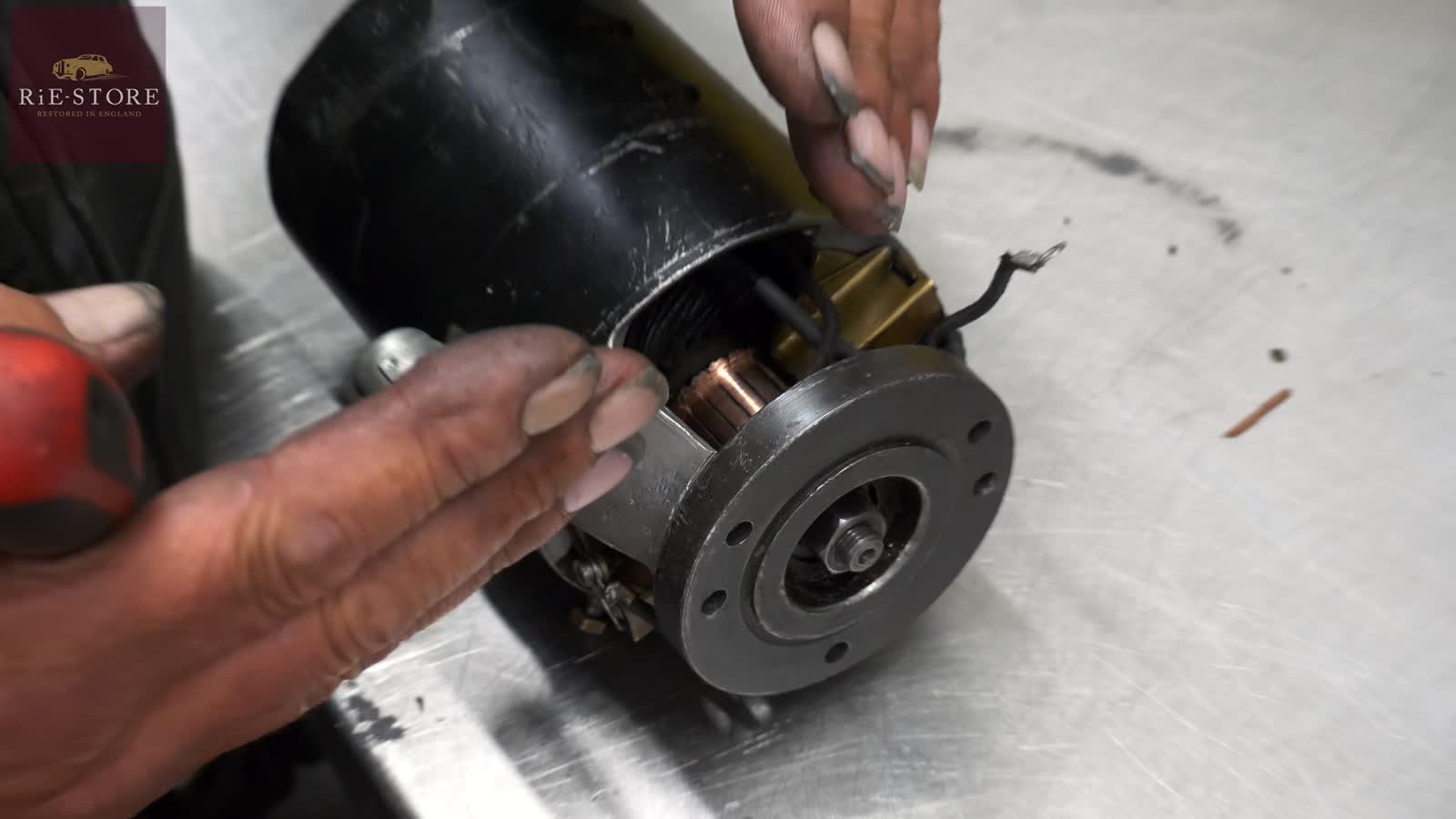
Looking more closely reveals physical damage as well as electrical concerns. Parts have been sitting in the wrong positions, allowing contact where there should have been clearance. The brush holders and the end of the commutator – the segmented copper surface contacted by the brushes – show the consequences.
Ash has already put the armature on the lathe to trim back the damaged area. Further checks leave him doubtful that it can be saved. There are broken wires, signs of rubbing and metal debris inside the housing. What first looked like a brush replacement has become a much more substantial rebuild.
The details matter here. This is a three-brush generator, with the third brush providing adjustment of its output. Ash's view is straightforward: if the original arrangement works, leave it alone. For this unit, the task is to establish what needs replacing and how everything should fit together.
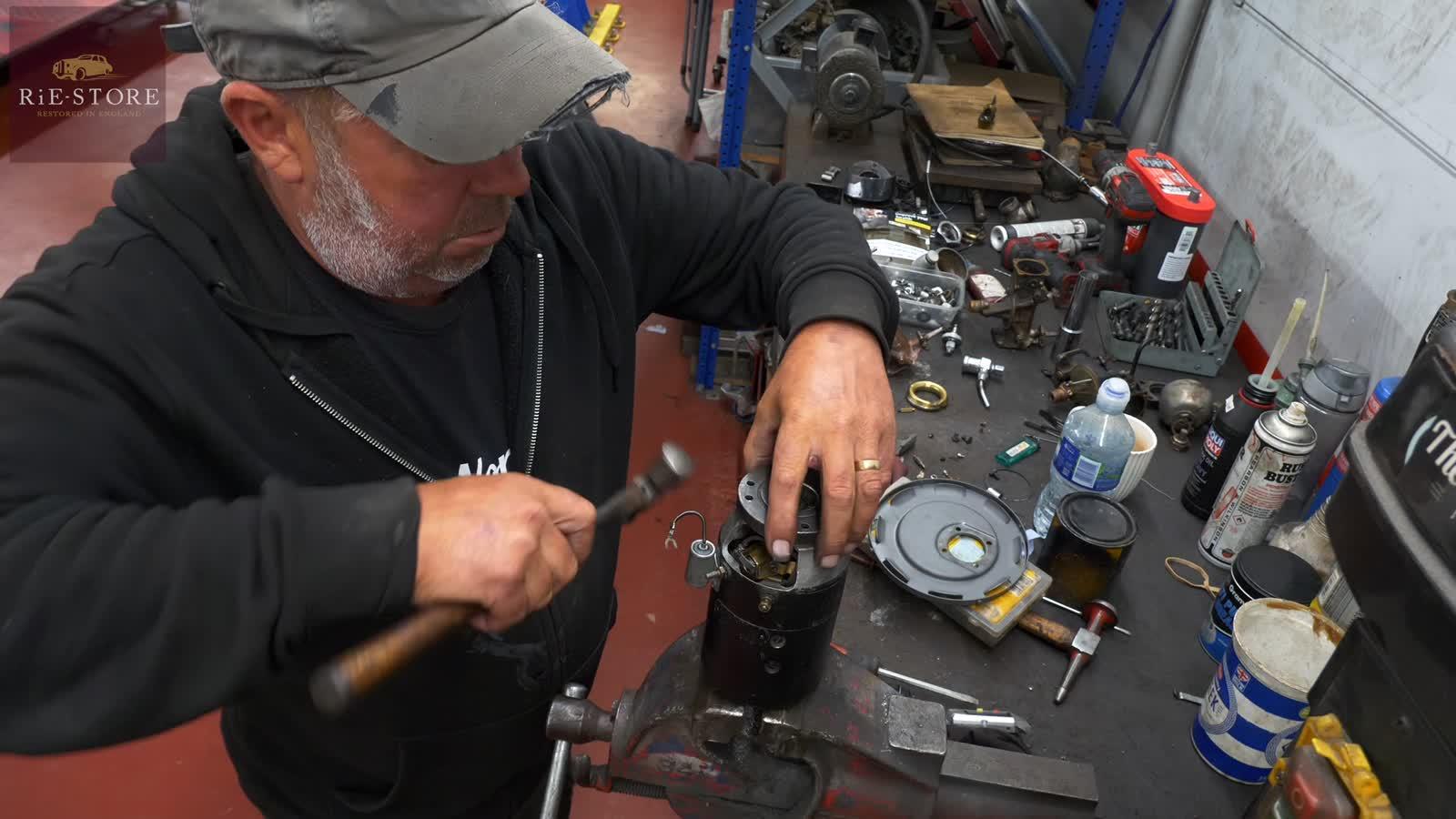
The field coils come under scrutiny too. Checks have not revealed a short to the housing, but there is visible wire damage, and signs that someone has ground away material inside the unit. Ash is reluctant to rebuild around components he cannot trust. Replacement field coils and an armature form the basis of the proposed repair.
Then the parts book turns a collection of loose components into a much clearer picture. A spring and an end cap are missing, along with several washers, spacers and another plate. Some screws are the wrong size. A rubber washer has appeared where the drawing specifies a steel one. Earlier in the investigation, an incorrect drive gear was also identified; Ash has found the right type among the workshop's parts.
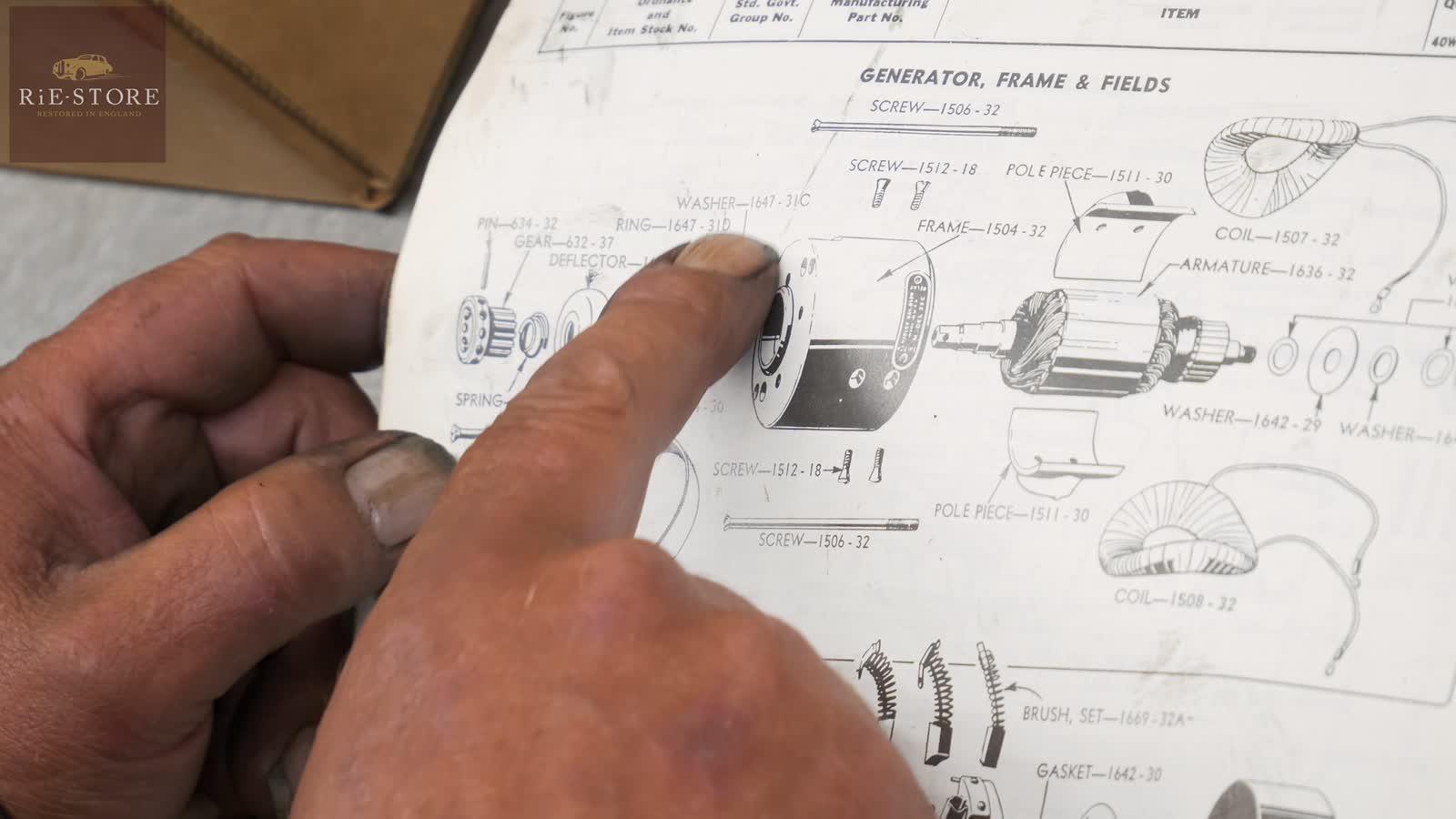
These small pieces determine where the assembly sits. Replacing the damaged electrical components will still leave a job to do: checking the bearings, restoring the missing parts and setting the spacing and shimming correctly. Otherwise, the conditions that allowed the damage remain.
By the end of the episode, we have an explanation for why a quick repair has not worked and a list of what a proper rebuild will require. The next step is to price the parts and discuss the cost with the customer before ordering.
The generator is not repaired yet. The progress is in knowing what we are dealing with: damaged components, missing hardware and an assembly that needs setting up from the beginning. Once the right parts are in place, we can give it a fair chance of working as it should.