
The 1966 Harley-Davidson Servi-Car can now select reverse, but the movement at the back still needs explaining. This week in the RiE-Store workshop, the rear box and axle are off, allowing Ash to investigate the wandering body and excessive half-shaft end float in detail.
The box frame goes into the vice first. It should pivot up and down on its mounting shaft, but the bushes allow unwanted sideways movement as well. A small amount of play at the pivot becomes much more noticeable at the back of the body, where Ash describes movement of around an inch.
The bushes reveal a particular problem. Their lubrication holes have not been aligned with the grease nipples in the frame. Grease pumped into the fittings has therefore had no route through to the shaft. Ash identifies that lack of lubrication as the reason the bushes have worn so badly.
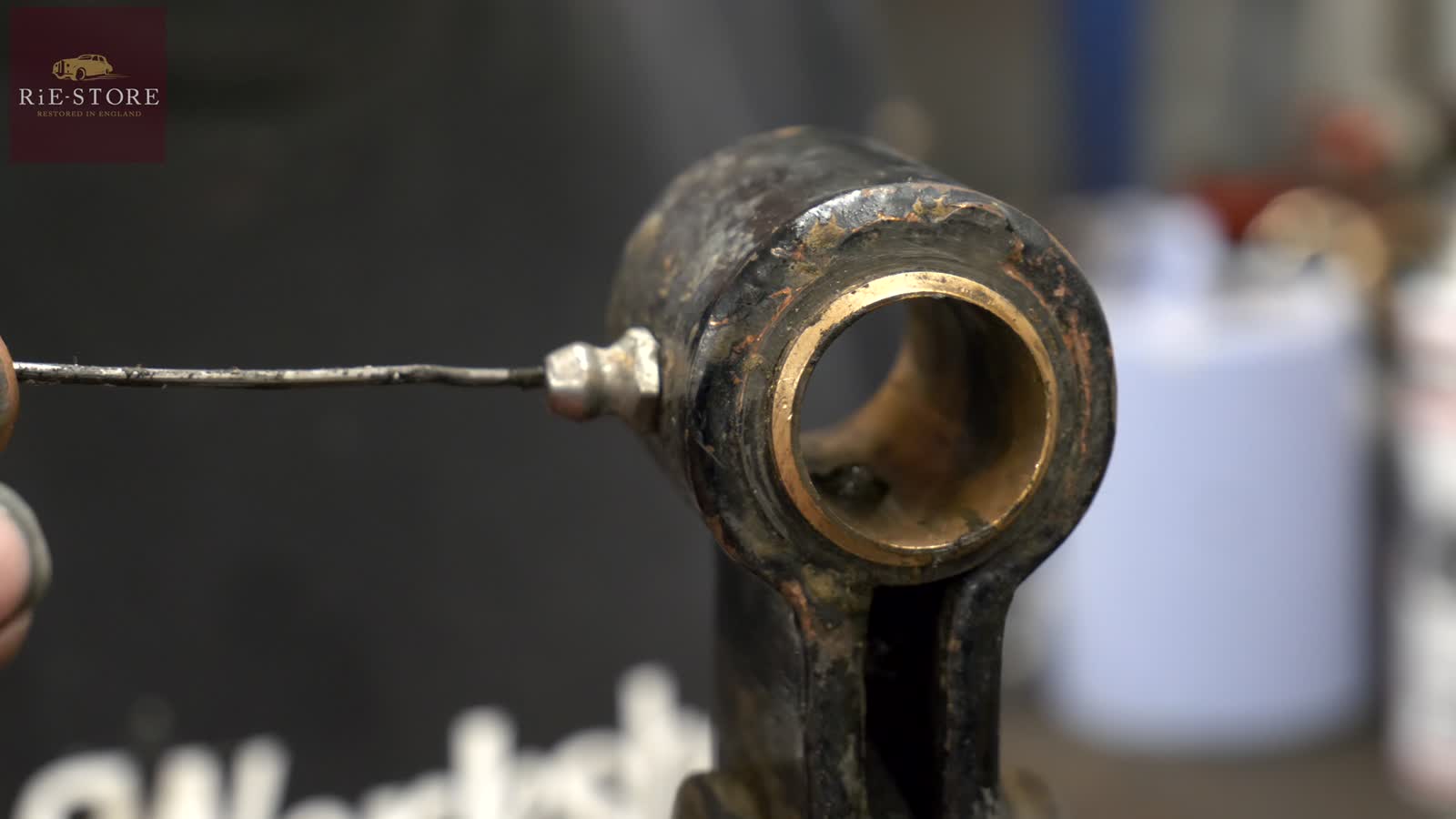
Making replacements had been a possibility, but Robin has found bushes available online. If those can be obtained, they will save the workshop the time involved in manufacturing a set. The repair itself looks straightforward once the worn bushes are removed; gaining access has been the larger job.
Attention then turns to the axle. The measured half-shaft end float – movement along the shaft’s length – is ten thousandths of an inch, and Ash cannot bring it into the required range with the parts currently fitted. Opening the assembly also reveals a separate concern: the bolts securing the differential together were loose.
With the casing split, the chain-driven differential comes into view. Ash explains how it allows the two rear wheels to rotate at different speeds through a corner. The familiar principle helps make sense of an assembly that looks rather different from a conventional car axle.
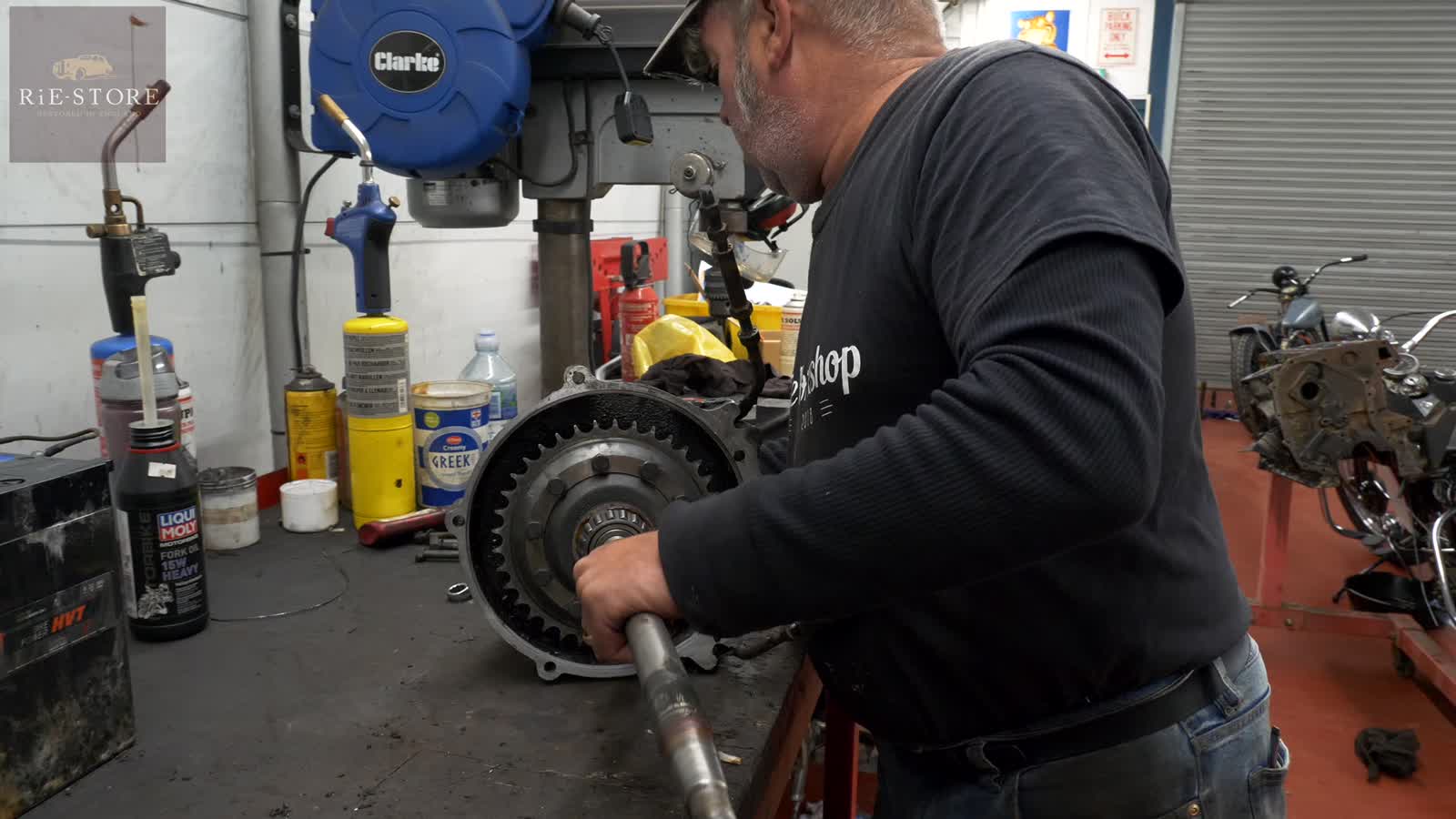
There are two adjustments to distinguish. The differential’s own bearing clearance is separate from the end float in the half shafts. Ash has already found the former too tight and adjusted it, but the components still need thorough cleaning before final assembly. The casing contains a considerable accumulation of grease and dirt.
Inside the differential, Ash shows how thicker thrust pieces alter the clearance between the half shafts and the centre assembly. The existing parts cannot provide the adjustment needed, so two thicker sizes have been ordered. The work will involve assembling, measuring and dismantling again as necessary until the clearances are right.
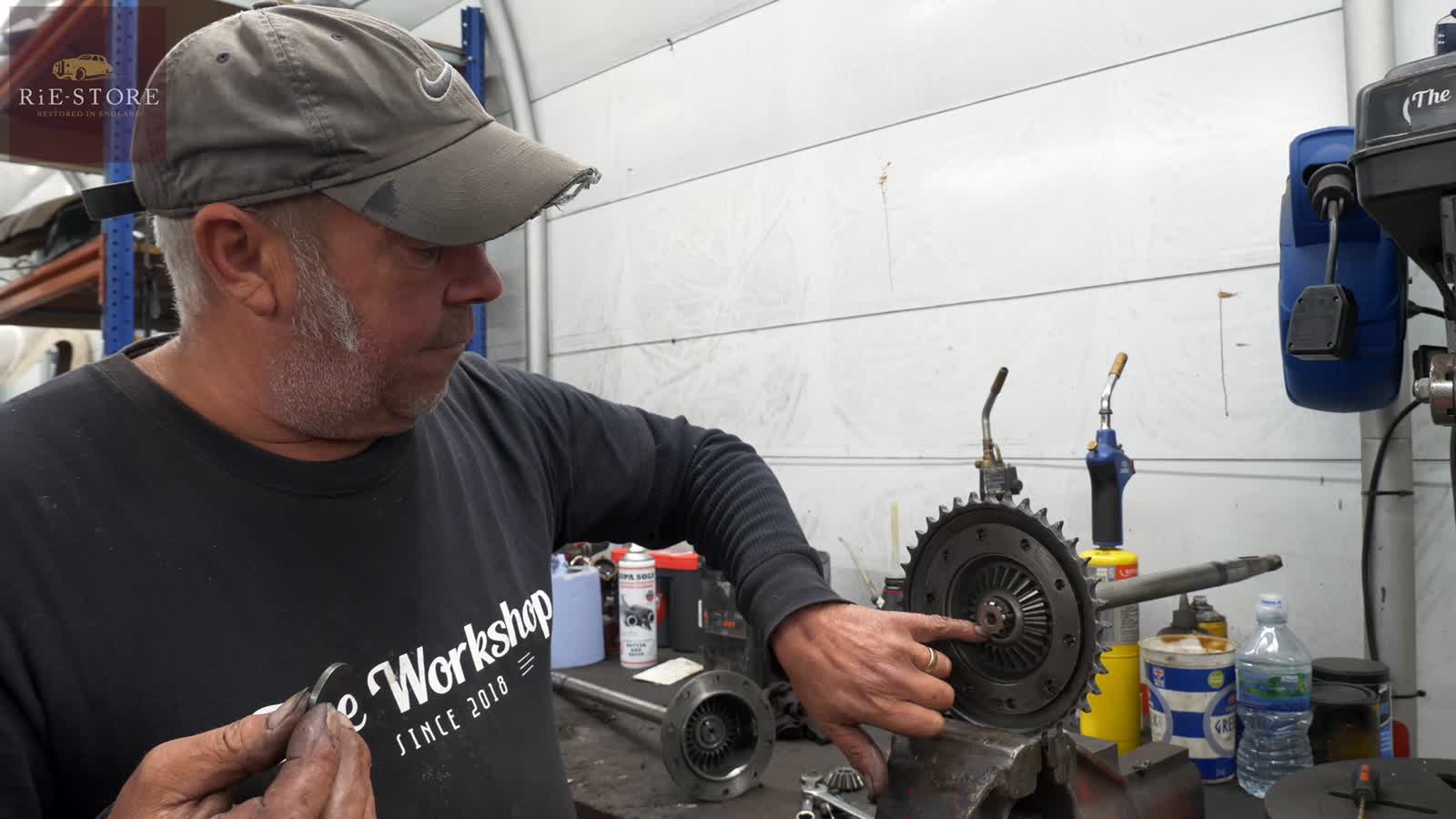
The loose fasteners receive attention too. Ash demonstrates the retaining ring that passes through the drilled bolt ends and explains the assembly sequence. Finding the ring in place had not meant the bolts were tight. It is an important discovery while the unit is apart, rather than after the Servi-Car is back on the road.
There is encouraging news beneath the grease. Ash considers the differential generally in good condition, with some wear and marks to assess but no badly broken internal parts. He relates its construction to the car differentials the workshop handles, while explaining the differences created by its chain drive and grease lubrication.
We finish waiting for the new thrust pieces, with the rear-box bush replacements also identified as a possible supply option. Next come cleaning, careful reassembly and repeated checks of the end float. The sources of the unwanted movement are now much clearer, and the loose bolts have added another reason why this strip-down was worthwhile.